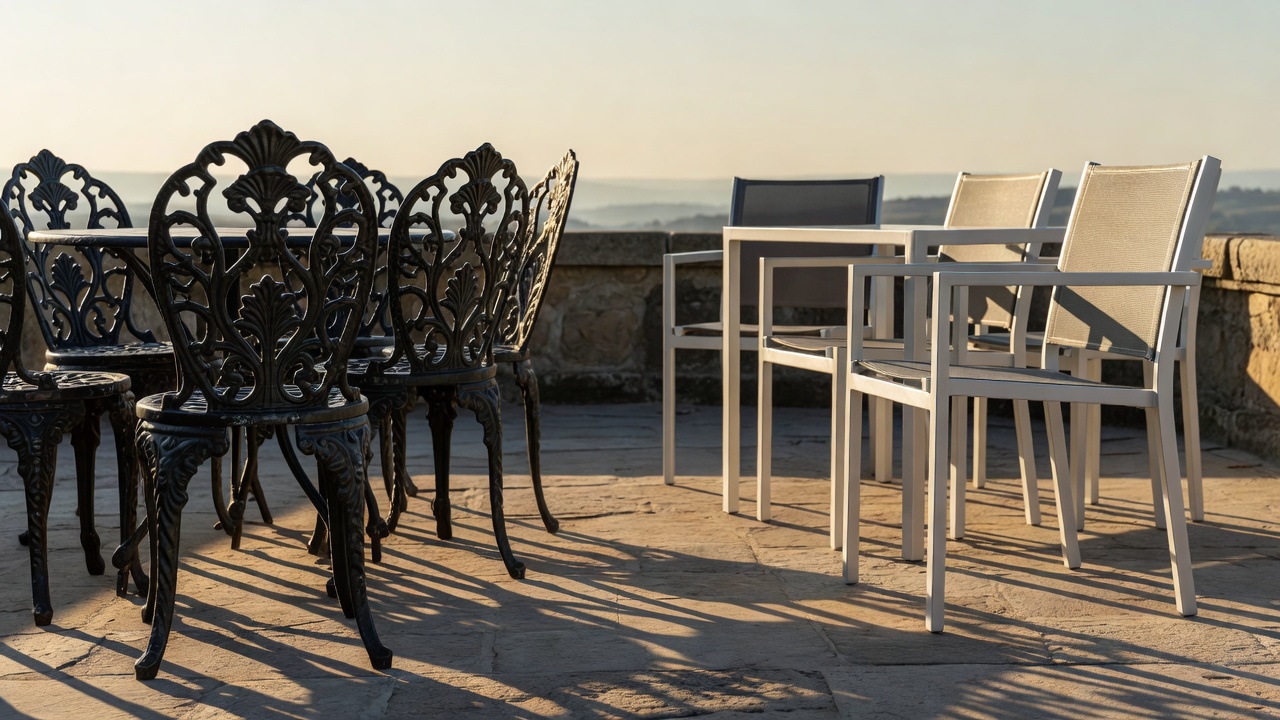
Metal provides an architectural rigidity that allows for highly slender profiles, intricate scrollwork, and minimalist frames. However, the performance of a metal garden chair is dictated entirely by its specific elemental composition and the integrity of its surface coating.
Aluminium is the most ubiquitous material in contemporary outdoor seating, favored for two paramount characteristics: it is exceptionally lightweight and it does not rust. Unlike ferrous metals, aluminium oxidizes by creating a microscopic, hard layer of aluminium oxide on its surface when exposed to air, which hermetically seals the metal underneath from further corrosion. Most aluminium garden chairs feature extruded tubular frames or cast aluminium components. Cast aluminium allows for solid, heavy, and ornately detailed designs, bridging the aesthetic gap between modern minimalism and vintage cast iron, without the rust liabilities.
Steel offers significantly higher tensile strength than aluminium, allowing for chairs that can support greater weights without the frame flexing. However, bare steel is highly susceptible to ferric oxide—rust. To counteract this, outdoor steel seating relies heavily on protective barriers, most commonly powder coating or galvanization (a zinc layer applied before the paint). If the powder coating on a steel chair is chipped or scratched, moisture will penetrate to the raw metal, initiating a localized rusting process that can quickly bubble and lift surrounding paint.
Wrought iron and cast iron represent the traditional, heritage end of the spectrum. Wrought iron is forged and hammered, resulting in elegant, sweeping curves, while cast iron is poured into molds, resulting in heavy, highly detailed rigid pieces. Both are tremendously heavy, virtually immune to being blown over in severe storms, and impart a classic Victorian aesthetic. They are, however, notoriously prone to rust. Maintaining iron seating requires vigilance: wire-brushing any nascent rust spots and routinely touching up the paintwork with specialist metal enamels.
Finishes and Powder Coating
The standard liquid paint of the past has largely been superseded by powder coating in the realm of outdoor metal furniture. In this process, dry thermoplastic or thermoset polymer powder is electrostatically applied to the metal frame and then cured under heat to form a skin that is tougher than conventional paint.
The durability of a powder-coated finish depends on the preparation of the metal substrate. Premium manufacturers utilize sandblasting and chemical etching to ensure the powder adheres perfectly. A high-quality powder-coated aluminium chair can sit outside year-round for a decade without peeling, whereas a cheap steel chair with poor pre-treatment may begin to show rust weeping from the joints within a single wet season.
Thermal Conductivity
One distinct disadvantage of metallic seating is its thermal conductivity. Metal rapidly absorbs and retains temperature. Left in direct, mid-summer sunlight, a dark-painted steel or cast aluminium chair can become scalding to the touch. Conversely, in early spring or late autumn, the metal rapidly conducts heat away from the body, feeling uncomfortably cold.
This thermal property makes the integration of textiles almost mandatory for extended use. High-quality outdoor cushions, fabricated from solution-dyed acrylics, are essential companions to metal seating. Alternatively, many modern designs utilize an aluminium frame slung with durable, UV-resistant textilene fabric, eliminating the need for separate cushions while circumventing the thermal issues of a solid metal seat pan.
Structural Ergonomics
Because metal does not possess the natural "give" of woven rattan or the flexibility of certain plastics, ergonomic design is critical. The angle of the backrest, the curve of the seat base (often contoured in cast aluminium designs to mimic the human form), and the placement of armrests dictate comfort.
When selecting metal chairs, particular attention must be paid to the feet. Raw metal legs will scratch stone patios and tear wooden decking. Ensure the chairs are fitted with durable nylon or rubber glides, and check that these glides are replaceable, as they will wear down over time as the chair is dragged across abrasive surfaces.
Ultimately, metal seating ranges from the hyper-modern extruded aluminium to the ornate cast iron bench. Balancing your threshold for maintenance (zero for aluminium, high for iron) with your aesthetic goals will guide you to the correct alloy.