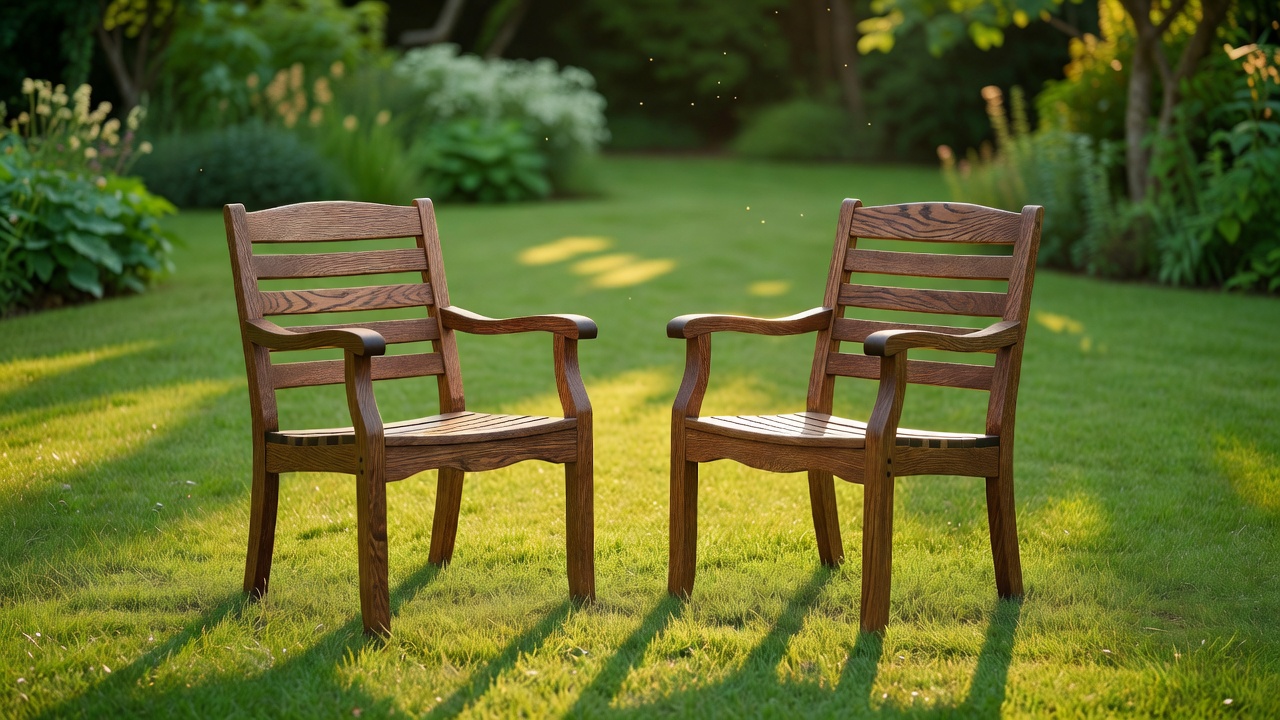
Timber offers a natural warmth, formidable weight, and organic integration into outdoor environments that synthetic materials often fail to replicate. However, selecting a wooden garden chair is an exercise in understanding botanical properties, climate interaction, and maintenance commitments.
The marketplace for wooden outdoor seating is dominated by hardwoods. While softwoods like pine or cedar are occasionally used for their lower cost and distinct aromas, they lack the dense cellular structure required to withstand prolonged exposure to ground moisture, fluctuating temperatures, and ultraviolet radiation. To ensure longevity, buyers invariably turn to tropical and robust temperate hardwoods.
Teak (Tectona grandis) remains the gold standard. Native to South and Southeast Asia, this dense hardwood is uniquely saturated with natural rubber and oils. These internal compounds act as an innate defense mechanism against water ingress, rot, and wood-boring insects. A newly milled teak chair presents a warm, honey-golden hue. Over time, when exposed to the elements, surface oxidation transforms this into a highly sought-after silvery-grey patina. This color shift does not indicate structural degradation; rather, it is a superficial weathering process.
Acacia is a highly popular, fast-growing alternative to teak. Sourced primarily from sustainable plantations, acacia boasts remarkable hardness and a rich, deeply grained appearance. While it shares some natural weather resistance with teak, it possesses fewer internal oils. Consequently, acacia garden chairs require more diligent sealing and oiling regimens to prevent checking (surface cracking) and warping when subjected to aggressive wet-to-dry cycles.
Eucalyptus sits comfortably between teak and acacia in terms of both cost and performance. Its high oil content offers substantial protection against moisture, but the wood grain is notably tighter. Oak, a traditional European choice, provides immense structural rigidity and historical aesthetic appeal. However, oak's high tannin content can leach when wet, potentially staining patios, and it generally requires a more robust exterior varnish or deep-penetrating oil to survive outdoor winters without splitting.
Structural Considerations and Joinery
The durability of a wooden garden chair is only as sound as its weakest joint. Outdoor furniture experiences significant thermal expansion and contraction. Wood breathes; it absorbs humidity from the air and expels it during dry spells. Poorly constructed joints will inevitably loosen, leading to wobbly frames and eventual collapse.
Premium wooden chairs utilize mortise and tenon joinery. This traditional technique, where a projecting tenon on one piece of wood fits exactly into a mortise cavity on another, provides immense load-bearing strength. In high-quality outdoor furniture, these joints are secured with waterproof polyurethane glues and reinforced with wooden dowels or marine-grade stainless steel/brass hardware that will not corrode and stain the wood.
Screws should be countersunk and optionally plugged, and bolts must be rust-resistant. Avoid wooden seating assembled predominantly with staples or low-grade steel brads, as these will rust, bleed black stains into the timber, and fail under mechanical stress.
Maintenance Protocols
Maintaining wooden garden chairs is often viewed as a chore, but informed care significantly extends the lifespan of the furniture. The regimen depends entirely on the material chosen and the desired aesthetic.
- Weathering Naturally: For teak and eucalyptus, allowing the wood to silver naturally requires minimal effort. An annual scrub with a soft-bristle brush, mild soapy water, and a specialized wood cleaner will remove surface algae and atmospheric dirt, preventing the grey patina from turning an unsightly black.
- Preserving Color: To maintain the original honey or reddish-brown tones, regular application of a UV-inhibiting wood protector or specific oils (like teak oil or boiled linseed oil, depending on the wood species) is necessary. The wood must be thoroughly cleaned and allowed to dry completely before oiling to avoid trapping moisture, which causes mildew.
- Winter Storage: Regardless of the wood type, overwintering chairs in an unheated but dry environment (such as a garage, shed, or beneath a highly breathable, structured cover) dramatically reduces the physical stress caused by freeze-thaw cycles. Do not wrap wooden chairs tightly in non-breathable plastic tarps, as the trapped condensation will rapidly accelerate rot.
Evaluating Weight and Portability
Hardwood chairs are inherently heavy. A solid teak armchair can weigh upwards of 15 kilograms. While this weight ensures the furniture will not blow across the patio during a gale, it makes rearranging the seating or moving the chairs into winter storage a physically demanding task. If frequent repositioning is anticipated, consider folding wooden designs, which employ thinner laths and pivot points to reduce overall mass without entirely compromising structural integrity.
In conclusion, wooden garden chairs represent a long-term investment in outdoor aesthetics. By understanding the inherent traits of specific timber species, insisting on high-quality joinery, and committing to appropriate seasonal maintenance, these chairs can provide decades of robust, natural elegance to any garden setting.