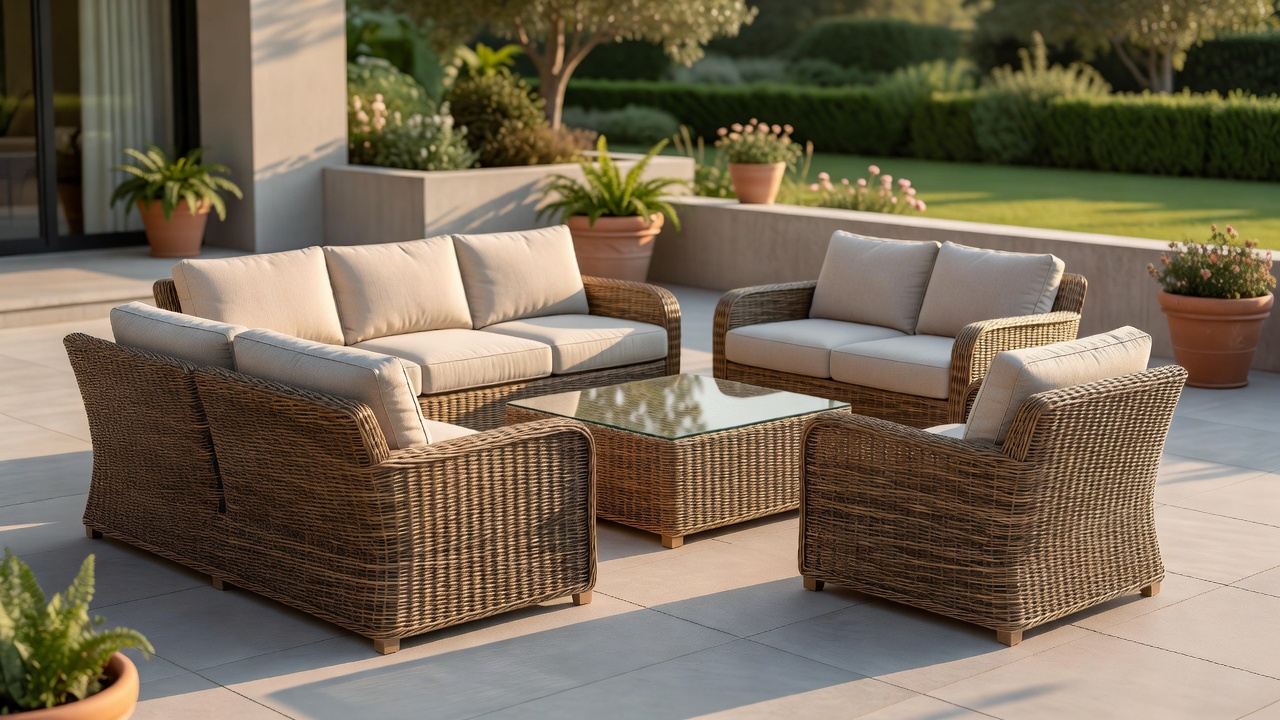
Woven furniture brings an undeniable textural richness to an outdoor space, softening the hard lines of patios and decking. However, understanding the nomenclature—and the materials behind it—is critical, as the difference between natural and synthetic fibers dictates whether your chair survives a single damp winter or lasts a decade.
First, a clarification of terms: "wicker" is not a material, but a technique. It refers to the ancient craft of weaving pliable plant materials into structural forms. "Rattan," conversely, is a specific material—a climbing palm native to the tropical jungles of Asia and Africa. While natural rattan has been used for centuries to create exquisite colonial-style furniture, its cellular structure acts much like a sponge.
When exposed to sustained rain, dew, or even high humidity, natural rattan absorbs moisture, leading to mold, mildew, and eventual rot. Under intense direct sunlight, natural rattan dries out, becomes brittle, and fractures under load. Therefore, genuine natural rattan chairs are strictly suitable for conservatories, covered verandas, or completely dry climates where they can be brought indoors during inclement weather. For exposed gardens in variable climates, natural rattan is highly impractical.
Enter synthetic rattan, often referred to as poly-rattan or resin wicker. This material was engineered specifically to mimic the organic aesthetic of natural rattan while eliminating its fatal vulnerabilities to weather. The quality of synthetic rattan, however, varies dramatically.
The superior variant is High-Density Polyethylene (HDPE), commonly referred to simply as PE rattan. This thermoplastic polymer is infused with UV stabilizers during the extrusion process. It is impervious to water, highly resistant to fading from sunlight, and maintains its flexibility across broad temperature ranges, preventing it from cracking in freezing weather. Lesser quality synthetic chairs are woven from Polyvinyl Chloride (PVC) or Polyurethane (PU). These cheaper plastics lack inherent UV resistance; they will rapidly fade, become brittle, and snap within a few seasons of outdoor exposure.
Frame Construction Under the Weave
A woven exterior is only as strong as the frame beneath it. In cheap synthetic rattan furniture, manufacturers often weave PVC strands over a bare or thinly painted steel frame. Because the weave is never entirely watertight, rain seeps through the strands and sits on the frame. The resulting rust bleeds orange stains down the legs and eventually compromises the structure, causing the chair to sag or collapse.
High-quality PE rattan chairs are exclusively woven over powder-coated aluminium frames. As established in metal seating, aluminium does not rust, ensuring the structural core of the chair remains intact regardless of water ingress.
Weave Profiles and Tension
The visual style and tactile comfort of a rattan chair are influenced by the strand profile:
- Flat Weave: The most common and economical profile. It provides a sleek, modern appearance and is highly flexible, conforming well to the body.
- Half-Round Weave: The strands have a flat back and a rounded front, offering a more robust, textured look that closely mimics natural rattan while retaining a flat surface against the frame.
- Full-Round Weave: The most expensive and material-heavy option. It looks virtually identical to thick natural rattan vines, offering immense durability and a heavy, traditional aesthetic.
Tension is the hallmark of craftsmanship in woven furniture. Press down firmly on the seat pan; a high-quality chair will exhibit very little give. A loose, sagging weave indicates poor manufacturing and guarantees the seat will deform permanently after short-term use.
Cleaning and Longevity
One of the primary advantages of PE rattan is its lack of maintenance. It requires no oiling, varnishing, or rust-treatment. Dust, pollen, and bird droppings can be removed simply by hosing down the furniture (on a gentle setting) and wiping it with a soft brush and mild soapy water. Power washers should be avoided, as high-pressure water can stretch the weave or force strands apart.
While PE rattan is exceptionally durable, utilizing a breathable, fitted furniture cover during the deep winter months is a judicious practice. This prevents dirt from accumulating deep within the weave crevices, ensuring the chairs are ready for immediate use when spring arrives.